
Taste before adding soy
The liquid should taste slightly lighter than the finished egg. Time will deepen both colour and seasoning.
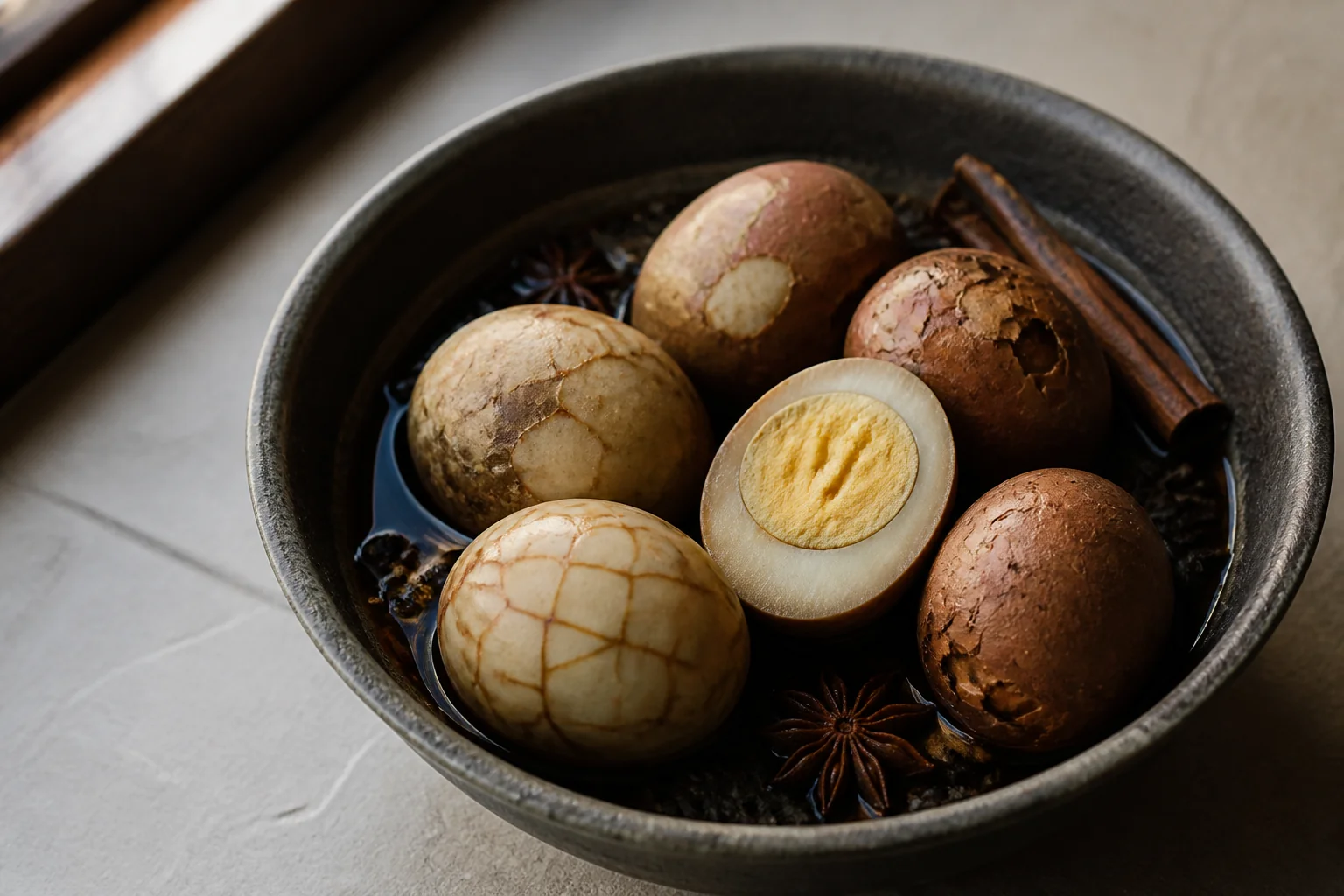
The family’s 30-egg batch: tea-rich, gently spiced, and better the next day.
MOD.02 / ENTRY 02
A large-batch tea egg with ripe Pu-erh, layered spice, and a lighter soy balance developed for the family pot.
The recipe settled into this version after a full 30-egg batch: brew the tea and aromatics first, keep the braise slightly lighter than you think, then rely on time rather than extra soy sauce for depth.
[ 01 / INGREDIENTS ]
[ 02 / METHOD ]
Start in cold water. Once boiling, cook for 8 minutes, then transfer to ice water for 5 minutes.
Tap every shell gently with a spoon to form fine cracks without peeling it.
Bring the water, soy sauces, sugar, salt, and aromatics to a boil. Simmer for 15 minutes so the spice has time to open.
Add the loose Pu-erh in a tea or muslin bag and simmer gently for 15–20 minutes. Remove it before it becomes too strong or leaves sediment.
Add the cracked eggs and simmer very gently for 20–30 minutes. Avoid a hard boil so the whites stay tender.
Cool and refrigerate promptly in the braise for 12–24 hours. Reheat thoroughly for about 10 minutes the next day, then allow more soaking time before serving.
[ 03 / KITCHEN NOTES ]
KEEP IN THE SYSTEM
The liquid should taste slightly lighter than the finished egg. Time will deepen both colour and seasoning.
Remove old tea and spices, strain out shell fragments, and save the liquid separately if you plan to reuse it.
Divide a large batch into shallow containers, refrigerate at 4°C or colder promptly, and finish refrigerated leftovers within 3–4 days.